


Most business owners don’t start their company with the intention of becoming trapped in daily operations. In the beginning, the business often represents freedom, opportunity, and the ability to build something meaningful. But as the company grows, many owners find themselves carrying more responsibility, not less.
Decisions pile up. Employees constantly seek direction. Operational issues consume the day. What once felt manageable begins creating pressure, and growth starts to feel heavier instead of more sustainable.
Over time, the business becomes increasingly dependent on the owner’s constant involvement.
While this pattern is common, it quietly becomes one of the biggest obstacles to long-term growth.
Growth Creates Complexity
In the early stages of a business, founder involvement is necessary. Communication is direct, decisions happen quickly, and the owner is often deeply connected to every part of the company.
The challenge is that what works at one stage of growth rarely works at the next.
As companies grow, complexity increases. More employees are hired, operations expand, and communication becomes layered. The business begins requiring stronger systems, clearer leadership, and greater organizational structure.
Many owners continue leading the same way they did when the company was smaller. They remain involved in every decision because it feels faster, safer, or more efficient. Eventually, however, the owner becomes the bottleneck.
Every major decision routes through one person. Team members hesitate to take ownership. Leaders manage tasks instead of driving strategy. Instead of building a scalable company, the business becomes more dependent on the founder.
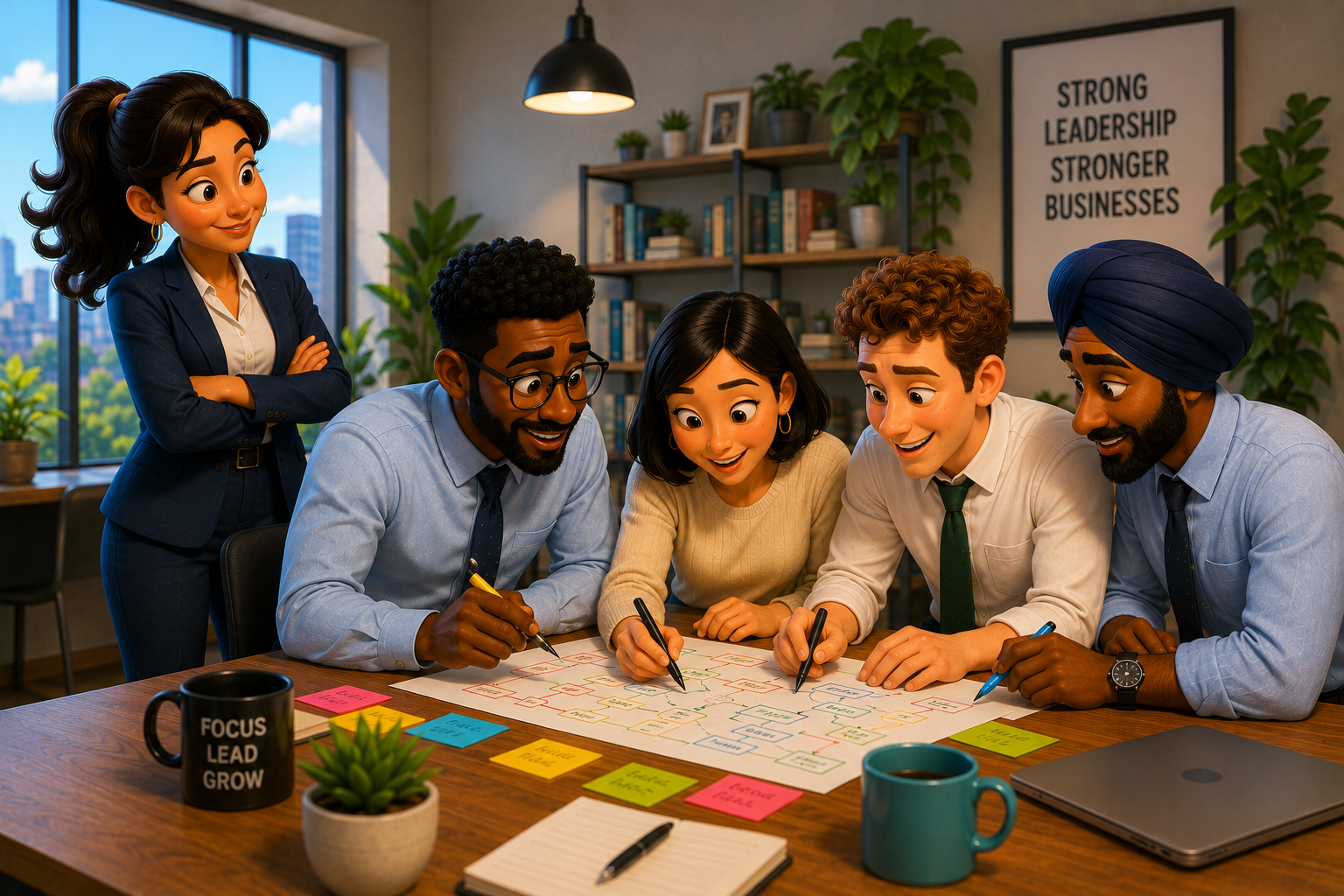
The Hidden Cost of Owner Dependence
Owner dependence doesn’t always show up immediately in revenue or performance. In fact, many companies continue growing while operational pressure steadily increases behind the scenes.
The owner becomes responsible for too many decisions. Strategic thinking gets replaced by constant reaction. Long-term planning gives way to daily problem-solving.
At the same time, teams often become less confident operating independently. Employees wait for answers instead of solving problems, and leadership development slows because responsibility never fully extends beyond the founder.
Over time, this creates several challenges:
- Slower organizational growth
- Increased owner burnout
- Reduced operational efficiency
- Limited leadership development
- Lower long-term business value
- Difficulty preparing for succession or exit
A business that cannot operate effectively without the owner is difficult to scale—and often difficult to transition or sell.
Scaling Requires a Leadership Transition
One of the most important shifts a business owner can make is the transition from operator to leader. Operators solve immediate problems. Leaders build organizations capable of solving problems without constant oversight.
That transition requires more than delegation. It requires creating clarity, building accountability, and developing leaders throughout the organization.
Leaders who successfully scale their businesses spend less time reacting to daily issues and more time focused on:
- Strategic direction
- Leadership development
- Organizational alignment
- Accountability systems
- Long-term business value
This does not mean becoming disconnected from the business. It means leading at a higher level.
What Stronger Organizations Do Differently
Businesses that scale successfully tend to share several characteristics.
They create organizational clarity so teams understand priorities, responsibilities, and expectations.
They invest in leadership development so responsibility is carried by capable leaders—not concentrated in one person.
They establish systems and processes that create consistency, accountability, and operational stability.
And most importantly, they shift their focus from short-term survival to long-term organizational health.
Strong companies are not built solely through effort. They are built intentionally.
Building a Business That Lasts
Many owners assume growth challenges can be solved simply by working harder. In reality, sustainable growth often requires stepping back far enough to lead the business strategically rather than carrying every operational responsibility personally.
The goal is not to become less involved. The goal is to build a company that no longer depends entirely on the owner to function effectively.
Businesses that scale successfully are built through strong leadership, aligned teams, disciplined systems, and a clear long-term vision.
That transition rarely happens overnight. But for leaders willing to make the shift, it creates something far more valuable than short-term growth—it creates a business capable of lasting well beyond the owner’s daily involvement.
.svg)