

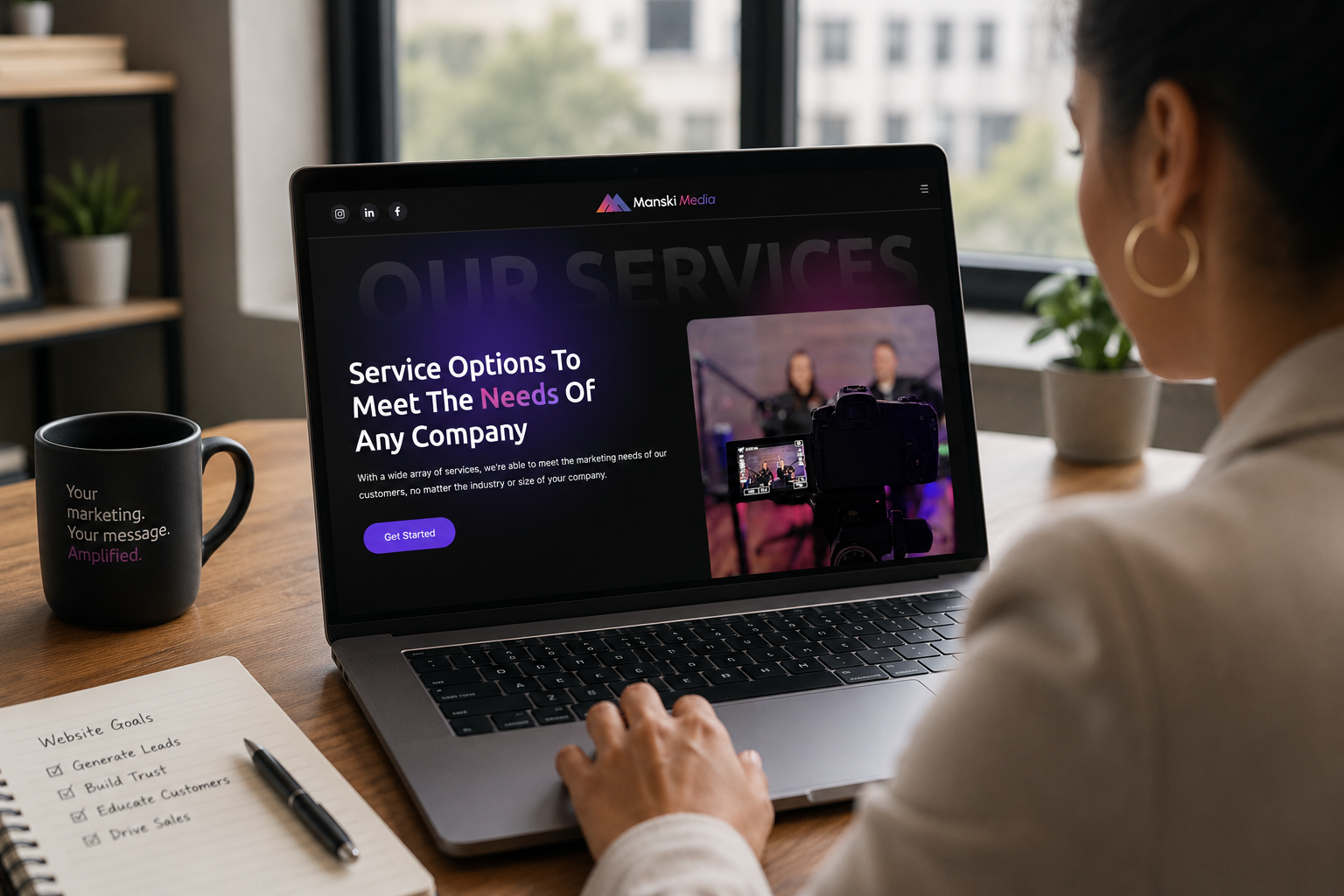
Most business owners don't think of their website as part of the sales team. It's something they had built a few years ago. It has their logo, a list of services, some photos, and a contact form. It looks professional enough, so they assume it's doing its job.
But here's the question:
If your website disappeared tomorrow,
would your ability to generate new business change?
If the answer is "not really," your website isn't pulling its weight. The best websites don't simply exist online. They answer questions, build trust, remove objections, and encourage people to take the next step. In many ways, they're your hardest-working salesperson because they're available 24 hours a day, seven days a week.
Your website often makes the first impression.
Long before someone calls your office or fills out a form, they've already formed an opinion about your business. They've looked at your homepage. They've compared you to a competitor. They've read your reviews. They've decided whether you feel trustworthy, experienced, and professional. That decision often happens in seconds.
If your website feels outdated, loads slowly, or makes visitors work to find basic information, the customer is likely assuming you operate your business in the same way. And many of them won't stick around long enough to contact you. They'll just move to the next company in Google's search results!
A good website answers questions before they're asked.
- Think about the conversations your sales team has every day.
- How long have you been in business?
- What areas do you serve?
- How does your process work?
- What makes you different?
- Do you offer financing?
- Can you help with my specific situation?
A well-designed website answers many of these questions before someone ever picks up the phone. That means prospects arrive better informed, more confident, and much closer to making a decision. Those answers don't just help potential customers. They also help search engines better understand your business.
Detailed service pages, location-specific landing pages, FAQs, and educational content give Google more context about what you do, where you do it, and who you serve. If you're a roofer in Bend, a chiropractor in Redmond, or a plumber serving all of Central Oregon, your website should make those relationships clear. The more relevant your content is to the searches people are making, the more opportunities you have to appear in organic search results.
Instead of repeating the same information over and over, your website can educate prospective customers, support your sales team, and strengthen your visibility in search, all at the same time.

Every point of confusion costs you opportunities.
Many websites accidentally create friction. Navigation is confusing. Service pages are vague. Contact information is difficult to find. Calls to action are buried at the bottom of the page. Visitors shouldn't have to solve a puzzle to become customers. Every extra click, unanswered question, or moment of uncertainty increases the chances that someone leaves your site and contacts a competitor instead.
Great websites remove friction. They guide visitors naturally from curiosity to confidence to action.
Trust is built long before the first conversation.
People don't buy from businesses they don't trust. That's why the strongest websites do more than explain services. They prove credibility.
- Customer reviews.
- Before-and-after photos.
- Project galleries.
- Videos.
- Professional photography.
- Awards.
- Certifications.
- Case studies.
- Helpful educational content.
Each element reinforces the same message: "You're in the right place." The more confidence your website builds, the less work your sales team has to do later.
Your website should support every marketing campaign.
Whether someone finds you through Google Ads, SEO, Facebook, YouTube, or a referral, nearly every marketing effort leads back to your website. That's why it's one of the most important investments you can make. Even the best advertising campaign can't consistently overcome a confusing website. On the other hand, a website that clearly communicates your value can improve the performance of every marketing dollar you spend.
Is your website working as hard as you are?
Your website shouldn't be an online brochure that simply lists your services. It should be an active part of your sales process, helping prospects understand your business, trust your expertise, and feel confident taking the next step. If it's doing that well, your sales team starts every conversation with an advantage. If it isn't, it may be creating more work than it's saving.
At Manski Media, we build websites that don't just look professional. We build websites that support your marketing, strengthen your brand, and help turn more visitors into customers. If you're wondering whether your current website is helping your business grow or holding it back, we'd be happy to take a look.
.svg)


